Reward system for your child: here's how to make one that suits you
A reward system for your child doesn't need to be a complicated plan. You choose a few things you'd like to see happen, agree on what they earn, and make your child's progress visible. How you fill that in is entirely up to you: for one family it's a sticker each time on the potty, for another it's saving up points for a day out in the autumn half-term. Below you'll read how to get started, what rewards other parents come up with, and how to keep it fun.
How do you create a reward system for your child?
Start with what you'd like to see, and make it concrete enough that your child can tell for themselves whether they've managed it. "Being nice" is hard to tick off, "taking your plate to the worktop after dinner" isn't. It can be one thing, but also a list: getting dressed, brushing teeth and packing your school bag for the morning, for example.
Then look at how often it comes up. If your child is practising potty training, "weeing on the potty" can easily be a task three times a day. Setting the table might be once a day, tidying the room once a week. There's no right or wrong; the system follows your day, not the other way round.
Then agree on what it earns and how quickly. A toddler wants to see something grow today, a sticker or a box that gets filled up. A nine-year-old can quite happily save for a week or longer for something bigger. Make the progress visible, with a reward chart on the fridge or with points in an app, and when you tick something off, also say what you see: "You packed your own school bag, well done." That compliment is often just as nice as the sticker.
Points per task: how do you divide them up?
With points you can make a distinction between tasks. Many families give one or two points for ordinary things and a bit more for a chore that really takes effort. A middle way is to give no points, or just one, for ordinary things like getting dressed and brushing teeth, and five or ten for extra chores such as raking the lawn or helping to wash the car. That way your child learns that helping out is normal, and that you get something back for doing something extra. Our tips on chores that suit different ages set out what you can ask per age group.
In Chup you set this per task. Your child ticks everything off themselves on the children's kiosk, watches the points grow and requests a reward once they have enough. You say yes or ask them to wait a little longer. If you'd rather work without rewards, you simply leave them out and your child only sees what they've done.
What rewards do other parents come up with?
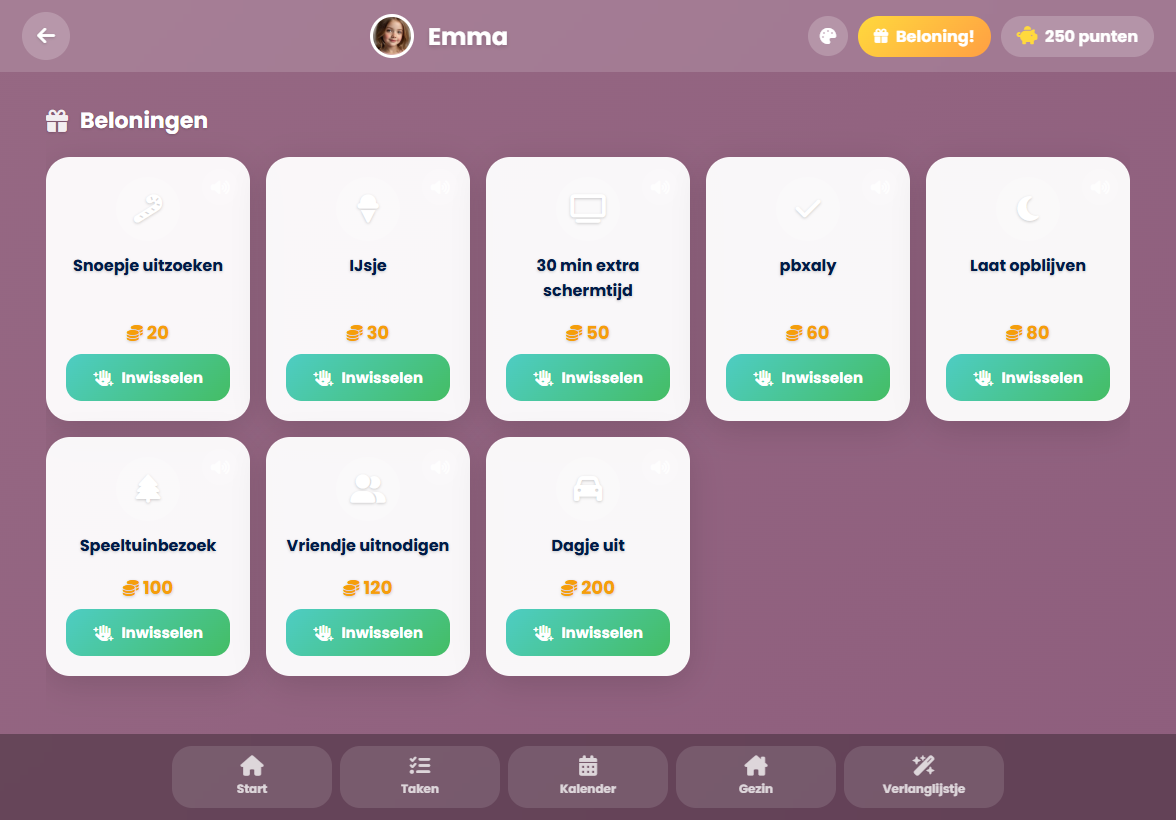
A reward doesn't have to be a present, and most parents work that out for themselves too. In Chup we see that parents mostly come up with rewards where their child gets to choose something or do something together with them: dessert, the Friday film, baking together, an extra story, a game, or an afternoon out alone with mum or dad. Staying up a little later or choosing what's for dinner are also popular.
A nice one we see among families: a joker card to skip a chore once. It costs nothing, and your child feels they have a say in something themselves.
Let your child help think up the list. A reward they've come up with themselves is worth more than one you've chosen. And pick rewards you'll still be happy with in a few months' time; five ice lollies a week, extra screen time every day or a generous amount of extra pocket money add up faster than you think. Saving for something bigger, like a day out, helps with that too.
A reward to look after: My world
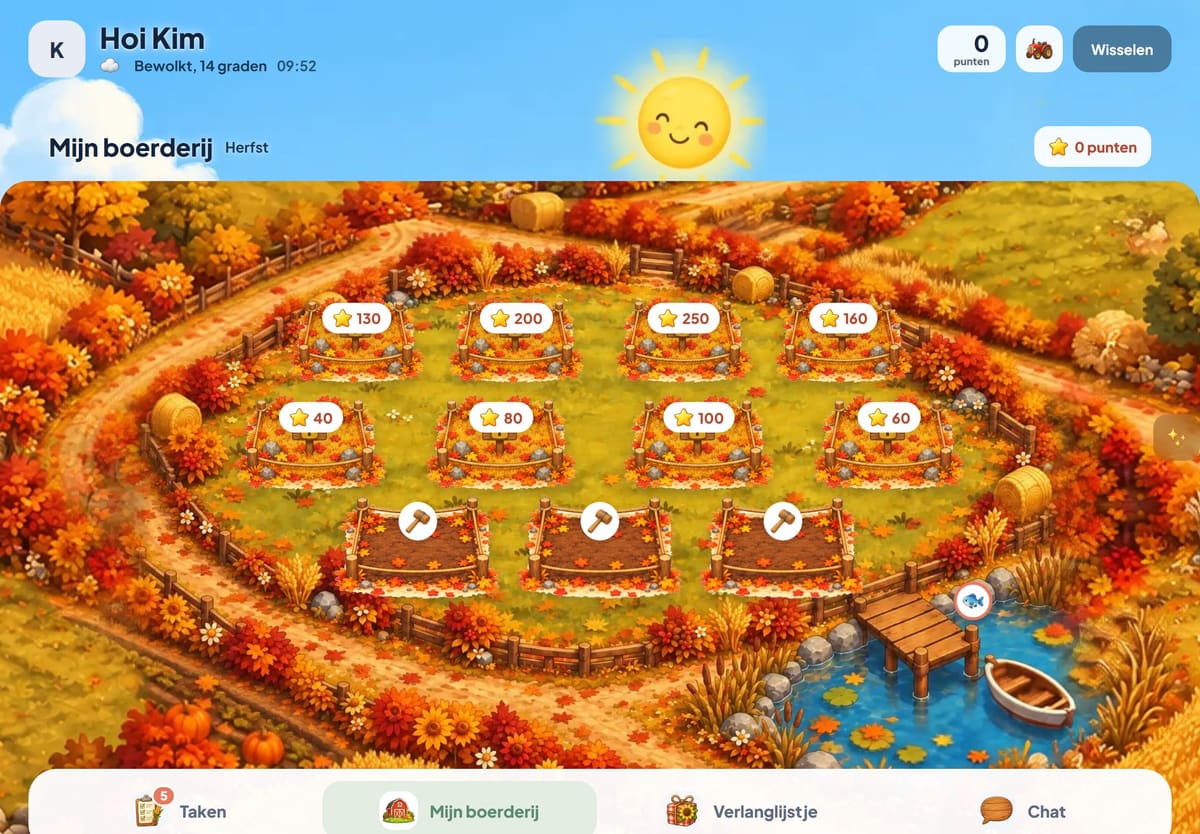
On the Chup kiosk your child also has their own world. It starts with a farm, and there they use the points they've saved to build a vegetable garden, a windmill or a barn, and buy animals that they name themselves. Those animals want to be looked after every day. The chicken wants grain, the vegetable garden wants water from the well, and only once you've fed them will there be eggs. This way your child learns, almost in passing, something about cause and effect. Forget it for a day and nothing dies: the animal looks a bit greyer, and tomorrow it simply starts again. In the evening the animals sleep, and the world changes along with the seasons and with Sinterklaas, Christmas and Easter.
It doesn't cost you any money or screen minutes, and your child takes care of something instead of just receiving something. If it's not for your family, you can switch the world off per child.
How to keep it fun
A reward system works best for things that don't yet come naturally. Once something does come naturally, you can lower the points for that task and choose a new goal. Children often enjoy thinking up what should come next on the list themselves. Also swap the reward from time to time if the old one no longer appeals, and above all keep pointing out what you see. That way it stays something you do together, rather than a list your child works through for you.
Frequently asked questions
From what age does a reward system work? From around the age of three, once your child understands that a sticker or a point means something. The younger they are, the more quickly the reward needs to follow: a toddler wants to see it straight away, an eight-year-old can save for a week.
What are fun rewards for children that don't cost money? Doing something together usually works best: cooking or baking together, choosing a game, staying up a bit later, a trip to the woods, choosing dinner themselves, or a joker card to skip a chore.
Should I reward my child for ordinary tasks? You don't have to. A middle way is to give no points, or just one, for ordinary things like getting dressed and brushing teeth, and more for extra chores.
Can I use a reward system for potty training? Yes. Turn "weeing on the potty" into a task that comes up a few times a day, and give your child a sticker or a point each time. For a toddler, a small reward that follows quickly works best.
How long do you keep up a reward system? For as long as it helps you. If a task starts happening naturally, you can take it off the list or attach fewer points to it, and together choose a new goal.
Comments (0)